If you’ve ever watched a newborn lock onto a black-and-white pattern and stare, you’ve seen their brand-new eyes doing exactly what they’re built to do. Here’s what’s going on behind that look, what your baby is learning, and how to make the most of it at home.
What newborns can actually see
Babies are born with eyes that work, but the parts of the brain that make sense of what they see are still getting started. In the first weeks, the world looks soft and fuzzy, and babies focus best on things about 20 to 30 centimetres away. That’s roughly the distance from your arms to your face during a feed, which is no accident.

The biggest difference from adult vision is contrast sensitivity: how well you can tell something apart from its background. Researchers who tested newborns found they need a huge amount of contrast before they can spot a pattern at all. Pale greys and soft pastels blur together for them, while bold black and white (or bright colour on black) jumps out. Their sensitivity climbs quickly over the first months and keeps improving towards adult levels across the first year.
And when does colour arrive?
Newborns mostly see light, dark and shades of grey. By around two months many babies start picking out strong, bright colours (reds are often first), and by four to five months colour vision is well on its way. That’s why bright colours on a dark background work for such a wide age range: the contrast grabs young babies, and the colour keeps older babies interested.
What your baby is learning when they look
- Focusing. Holding their gaze on one thing is a skill, and strong contrast gives them something easy to practise on.
- Tracking. Following a shape as it slowly moves helps both eyes learn to work together, which later supports reaching, crawling and catching.
- Paying attention. Each little bout of looking is attention in action. Babies naturally look, look away and look back, and that rhythm is how they regulate themselves.
- Shapes, faces and patterns. Babies are drawn to edges, curves and face-like shapes. Bold patterns give their developing brain clear examples to sort.
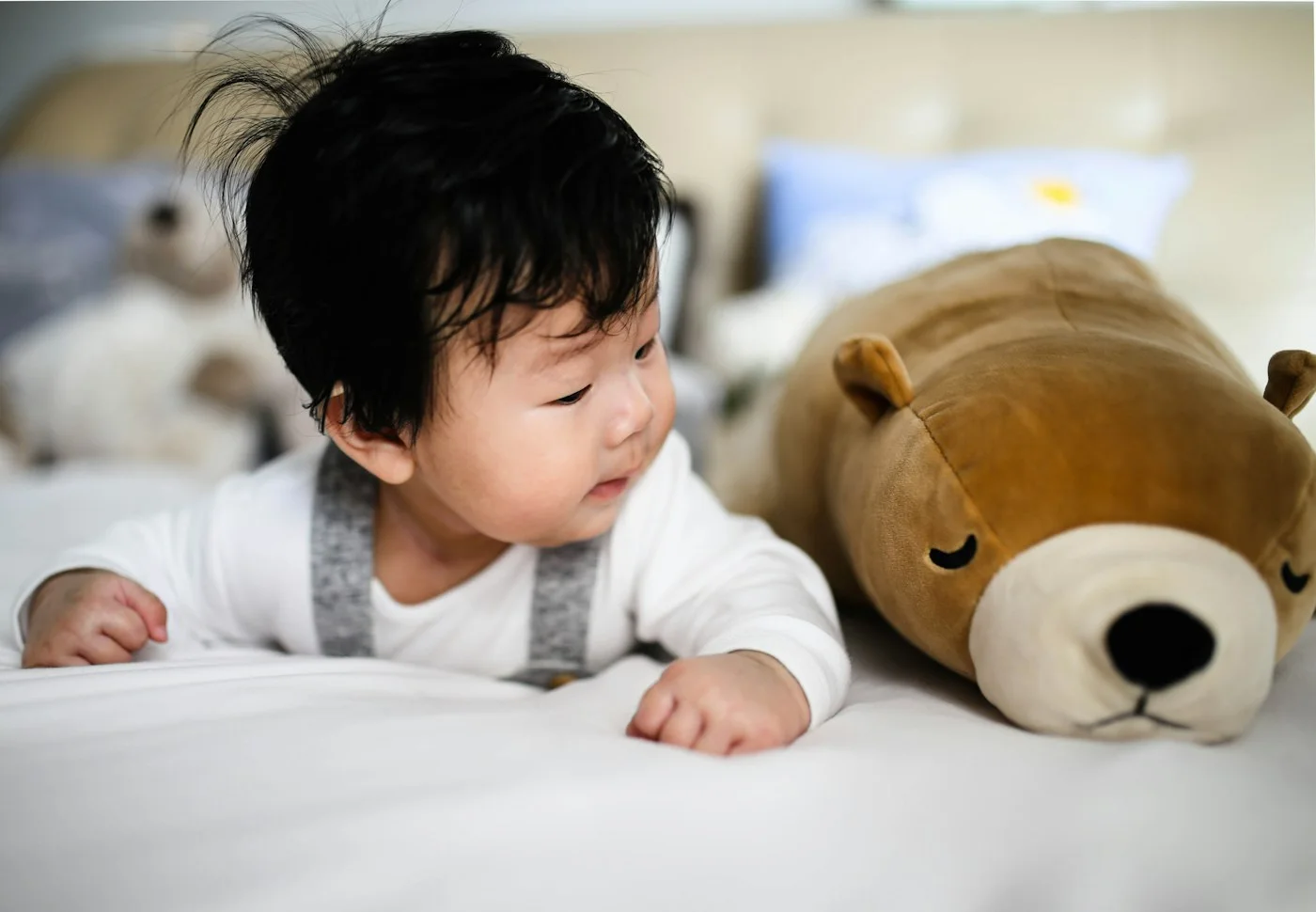
A quick, honest note: there’s no good evidence that black-and-white cards or videos make vision develop faster. Healthy eyes develop on their own schedule. High contrast simply makes things easier for babies to see, which makes looking more rewarding, and that’s a lovely thing to offer them.
Easy ways to use high contrast at home
- Keep it close. Hold a book or card 20 to 30 centimetres from your baby’s face, a little to one side, and give them time to find it.
- Move slowly. Once they’ve locked on, glide it slowly left and right and watch their eyes follow.
- Make tummy time more fun. A fold-out high-contrast book or a floor mirror propped in front of them gives a reason to lift that heavy little head.
- Follow their cues. Turning away, fussing or yawning means “that’s enough for now”. Short and sweet beats long and tired.
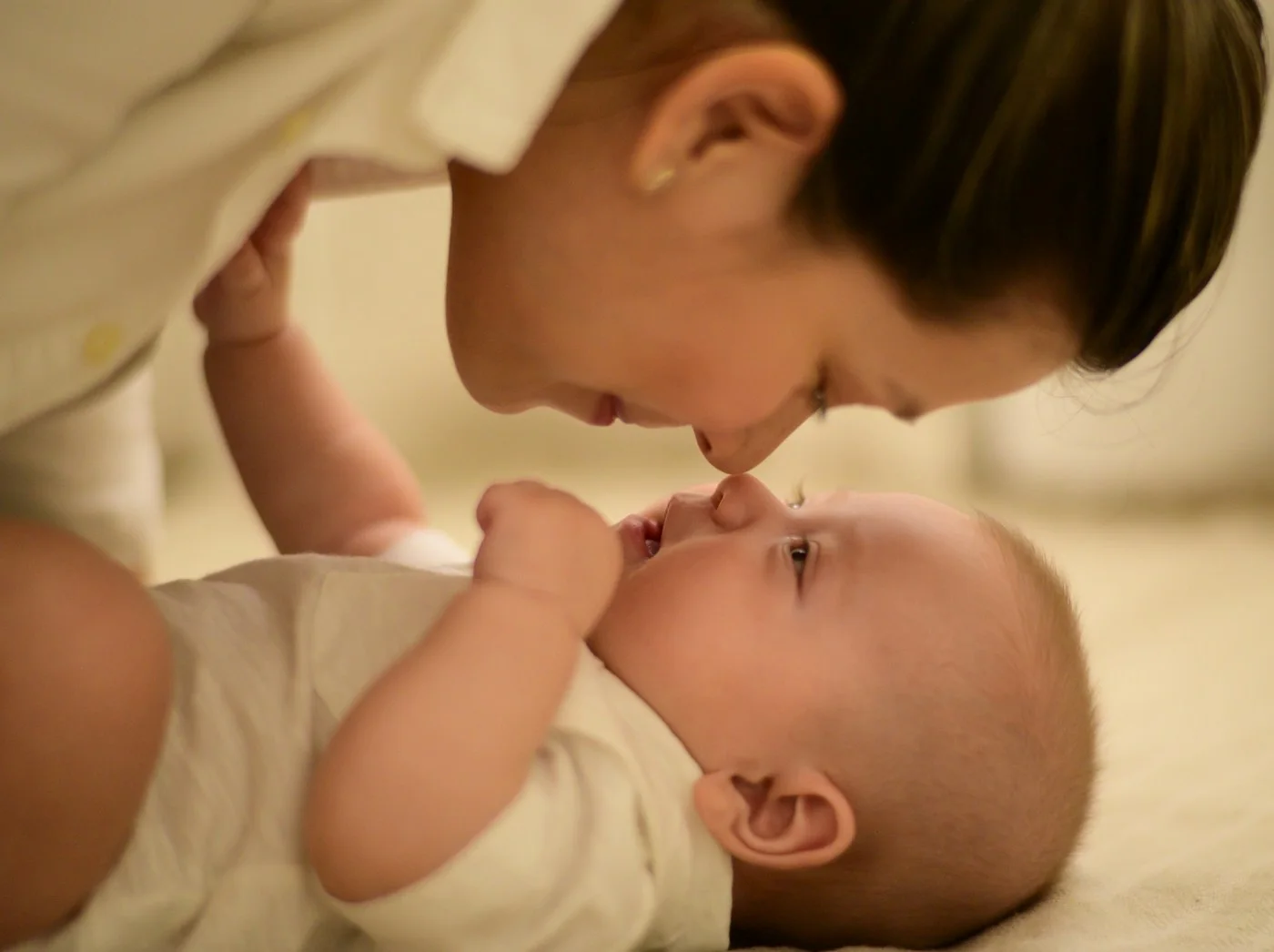
- Your face is the best toy. Your eyes, eyebrows and smile are naturally high contrast. Get close, slow down, and chat.
Where our videos fit in
We put every Best Baby Sensory character on a black background with bold, saturated colour and slow, gentle movement for exactly these reasons: it’s easy for young eyes to find and follow. Health guidelines suggest keeping screen time for under-twos to a minimum, so we think of our videos as an occasional, shared treat rather than a babysitter. Our gentle screen-time guide explains how we approach it.
Quick questions
Do babies need black-and-white toys?
Need, no. Enjoy, very often yes. Faces, everyday objects and conversation give babies everything they need. High-contrast books and toys are simply an easy, inexpensive extra that young babies tend to love.
Until what age is high contrast useful?
It’s most eye-catching in the first three to four months. After that, bright colours, textures and things to grab take over, but many toddlers still love bold colour on a dark background.
Can high contrast be too stimulating?
Anything can be too much if it goes on too long. Keep sessions short, watch for cues like turning away, and offer quiet, dim time before sleep. If you have any worries about your baby’s eyes or how they’re tracking, check in with your GP or child health nurse.
Sources: contrast sensitivity in newborns (Investigative Ophthalmology & Visual Science); development of infant contrast sensitivity (review); visual development and object recognition (University of Minnesota). This article is general information, not medical advice.